
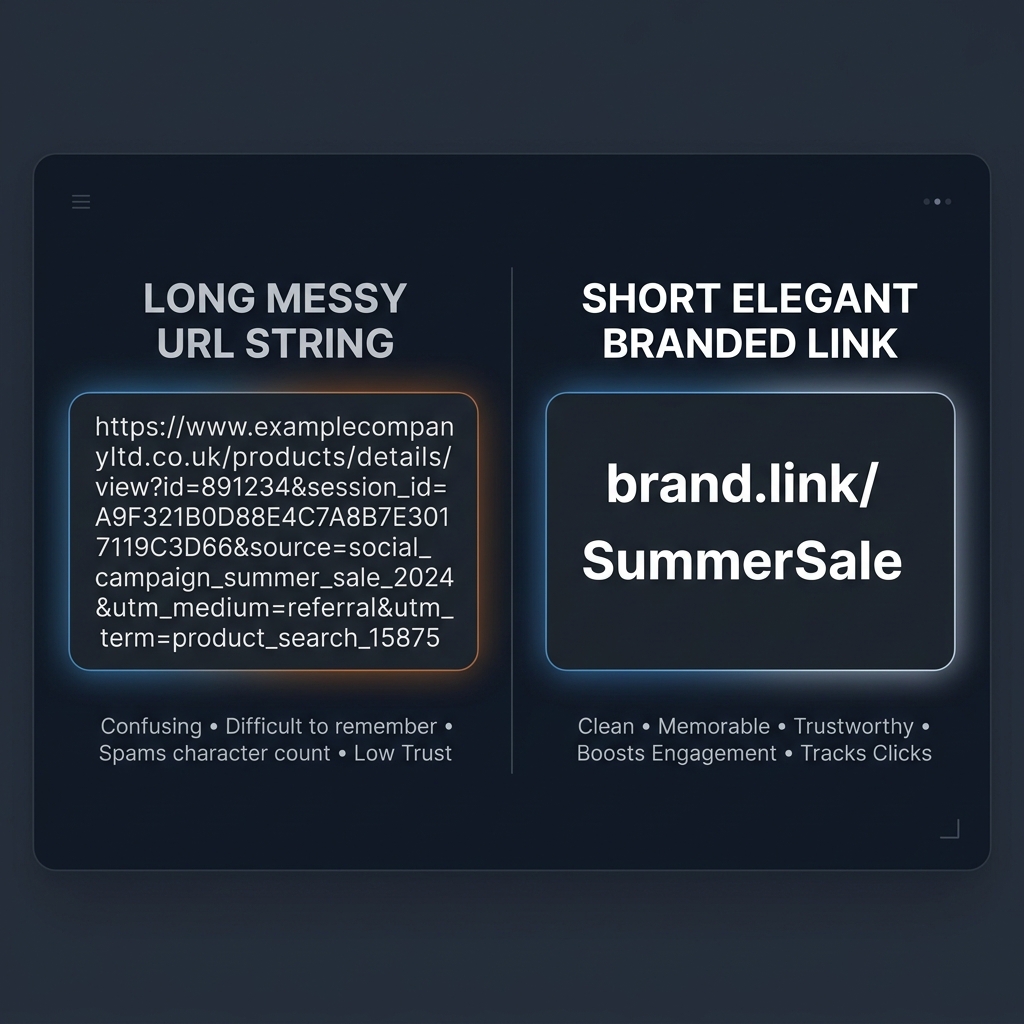
Should you use short links or long URLs? Compare trust, readability, tracking capabilities, and social media display for both options.
Every time you copy a web address to share it with your audience, you face a choice: do you paste the original, long URL, or do you run it through a shortener first? While it might seem like a simple cosmetic decision, the type of link you choose can impact your click-through rates, brand reputation, and ability to track campaign success. Let's explore the key differences between short links and long links, and when to use each.
The Case for Long Links: Clarity and Directness
Long links (also known as full or raw URLs) show the exact path to a specific page on a website. For example: https://www.yourdomain.com/blog/marketing/how-to-write-copy. Here are the primary advantages of sharing full URLs:
- Perfect Transparency: Users can see exactly where they are going before they click. There is no mystery or fear of redirection loops.
- No Dependency on Third Parties: If you use a raw URL, the traffic goes directly from the source to your website without depending on a redirection server.
However, long links have significant drawbacks. They are visually cluttered, can break easily when copied, and take up excessive space in character-restricted fields like social media bios or SMS campaigns.
The Case for Short Links: Brand Control and Analytics
Short links are condensed web addresses that point to a redirection server. When someone clicks a short link, the server routes them to the final long URL instantly. Short links, particularly branded short links (e.g., brand.link/strategy), offer massive benefits:
- Visual Neatness: They look clean, professional, and integrate smoothly into social posts, emails, and presentations.
- Dynamic Flexibility: You can edit the destination URL of a short link at any time. If you link to a PDF that needs an update, you can change the target URL in your dashboard without changing the link you shared on social media.
- Campaign Analytics: Short links created through platforms like JKZ Network track essential visitor analytics, showing you which platforms drive the most traffic.
- Deliverability: Short links prevent email clients and SMS gateways from breaking long, parameter-stuffed URLs, ensuring a smooth path to your site.
Comparison: Short Links vs. Long Links
Let's compare both link formats across key marketing criteria:
| Criteria | Long Links (Raw URLs) | Short Links (Branded) |
|---|---|---|
| Aesthetics | Messy, cluttered, and unprofessional. | Clean, tidy, and visually appealing. |
| Tracking Capabilities | Requires complex manual UTM tracking setup. | Built-in real-time analytics dashboards. |
| Editability | Permanent once shared or printed. | Fully editable destination URLs. |
| Trust Factor | High transparency, but visually intimidating. | High trust if branded; lower if generic. |
When to Use Long Links
Use long links when transparency is the single most important factor. This is often the case in security-sensitive communications, official banking portal links, or internal wiki documentation where users expect absolute clarity on domain paths.
When to Use Short Links
Short links are the optimal choice for almost all digital marketing and public communication channels. Use them for:
- Social Media Posts: Keep your captions clean and easy to read.
- SMS Marketing: Save character space and avoid broken, wrapped links.
- Print Media: Use readable branded links on flyers, brochures, and billboard ads.
- Affiliate Marketing: Cloak long, confusing affiliate links with clean redirection paths.
Conclusion and Next Steps
While long links have their place in technical and high-security settings, short links are the undisputed winner for marketing, social media, and business growth. By switching to branded short links, you maintain complete control over your traffic, brand presence, and performance tracking.
Ready to start using smart short links? Create a free account on JKZ Network today to shorten, customize, and track your links. To learn more about link analytics, check out our guide on Understanding Link Analytics.